Estimator
Has the BOQ


DIGITAL TRANSFORMATION
For construction businesses, digital transformation is about connecting the way you estimate, purchase, execute, track costs and invoice — so your business has better information to make decisions.
Digitise what slows you down. Connect what already works.
Growth needs a stronger operating model
Saudi Arabia, the UAE and the wider GCC continue to see significant investment across construction, infrastructure, real estate, tourism, commercial development and urban transformation.
For contractors, that creates opportunity — but it also creates pressure. More projects mean more estimates, suppliers, purchase orders, subcontractors, site teams, variations, expenses, approvals and invoices to manage.
The processes that worked when your company handled a few projects may become increasingly difficult as the business grows. Digital transformation is not simply replacing paper with software.
“It is about building a business that can grow without losing control.”

Practical change
For a growing contractor, digital transformation can be surprisingly practical.
Information in people's heads
Shared project information
Separate Excel files
Connected project data
WhatsApp approvals
Traceable decisions
Paper site reports
Digital site records
Manual cost checking
Live project cost visibility
Finding problems after completion
Identifying them while the project is running
Waiting for management reports
Information when you need it
The objective isn't to use more technology. The objective is to run the business better.
Connect useful tools
Excel works. WhatsApp works. Email works. Accounting software works. The challenge begins when each one holds a different part of your project.
Estimator
Has the BOQ
Procurement
Knows what was ordered
Project Manager
Knows what's happening on site
Finance
Knows what was paid
Customer
Knows the changes requested
Management
Trying to connect everything
One connected project view
“Are we actually making money on this project?”
Digital transformation starts by connecting these pieces.
Start with lost, duplicated or delayed information
You don't need to digitise your entire company at once. Start where information is being lost, duplicated or delayed.
Estimation & BOQ
Your estimate contains some of the most valuable commercial information in the business. Once you win the project, don't leave that information behind in an Excel file.
Connect the BOQ and estimated costs to project execution so they become the baseline against which actual performance can be measured.
Procurement
RFQs, supplier quotations and purchase orders directly affect project profitability. Digital procurement makes it easier to understand:
Instead of procurement operating separately, purchasing becomes part of project control.
Site Operations
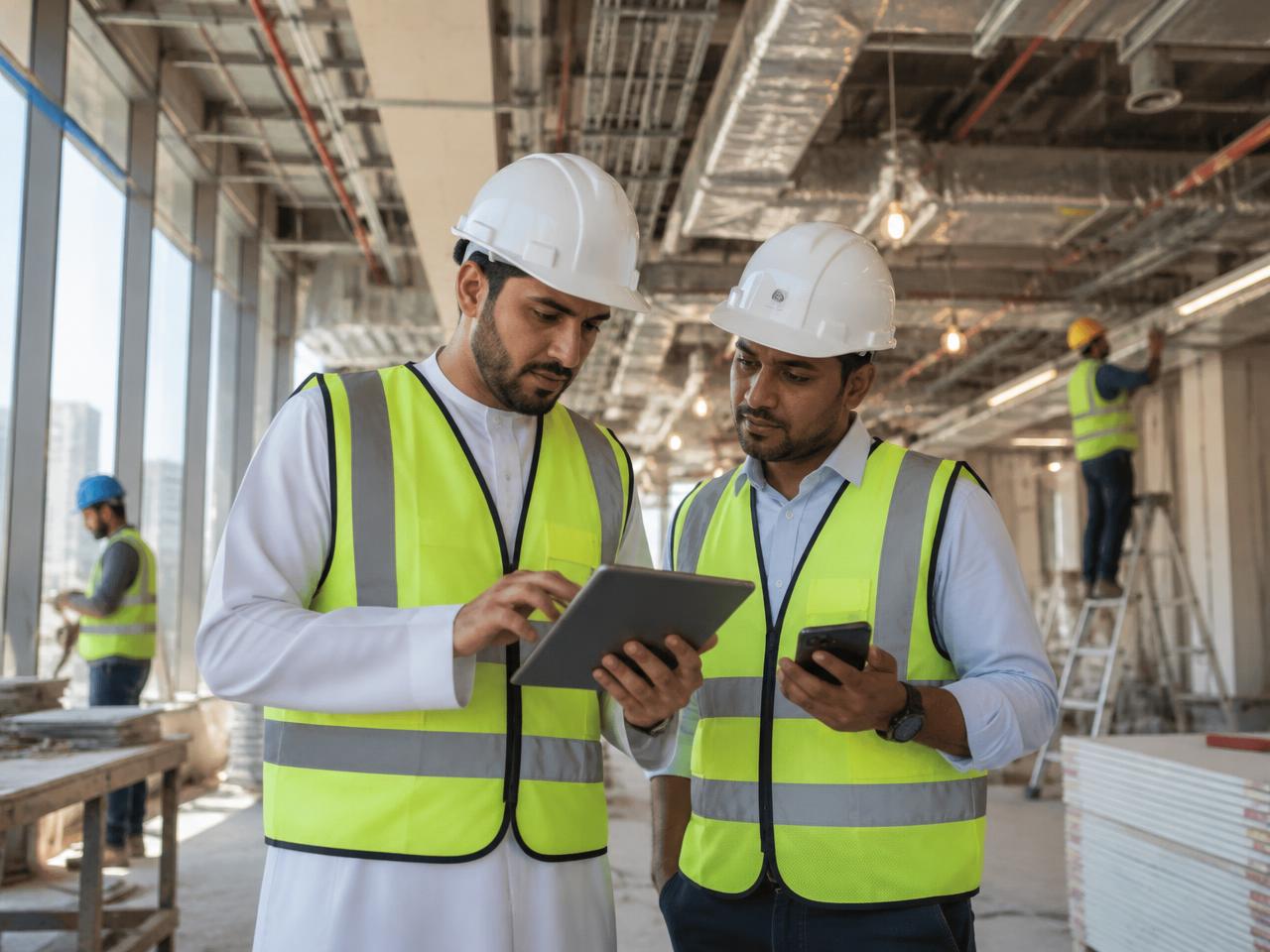
Construction happens on site, but many commercial decisions happen in the office. Digital site reporting helps connect the two.
Management gets better visibility without constantly calling project managers for updates. Site information becomes part of the project's history rather than disappearing into messages and individual phones.
Project Cost
One of the biggest advantages of digital construction management is the ability to bring different project costs together and compare them against what was originally estimated.
Old question
“How much did this project cost?”
New question
“Where is our project cost today?”
Variations
Changes happen every day in construction. But when they are managed through conversations, emails and spreadsheets, additional work can easily become additional cost without becoming additional revenue.
Better variation control helps protect both project margin and customer relationships.
Invoicing
Project information and invoicing shouldn't live completely separate lives. When progress, variations and commercial information are connected, it becomes easier to understand what has been completed, what can be invoiced, what has already been invoiced and what remains outstanding.
Better visibility can help reduce delays between doing the work and billing for it.
Visibility creates responsibility
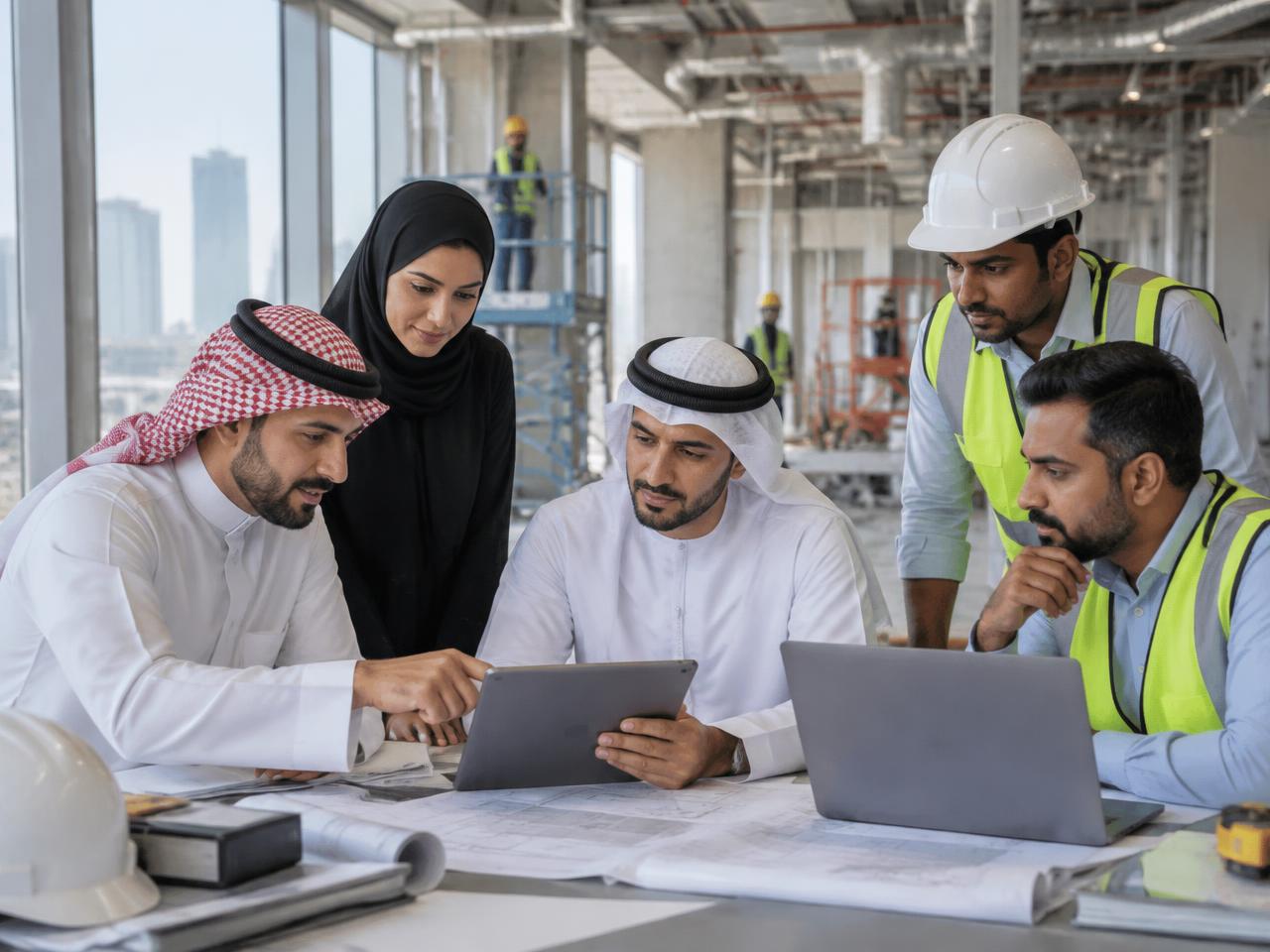
Technology doesn't only improve speed. It creates visibility.
This becomes increasingly important as construction businesses grow and more people become involved in each project.
Processes that scale
Growth changes the way a construction business needs to operate.
When a company manages five projects, the owner may personally know what is happening everywhere. At twenty projects, that becomes harder. At fifty, relying on memory, calls, chats and spreadsheets becomes a business risk.
Digital systems help move knowledge from individual people into repeatable business processes. Your company can grow without requiring the owner or senior management to personally follow every transaction.

5
Owner knows almost everything
20
Information becomes harder to follow
50
Processes and systems become essential
Saudi Arabia
Building Businesses for a Rapidly Changing Construction Market
Saudi Arabia's construction environment is evolving alongside the Kingdom's broader economic transformation. Large developments may attract the headlines, but the opportunity extends across the ecosystem to general contractors, subcontractors, MEP companies, fit-out businesses and specialty contractors.
For growing Saudi contractors, digitalisation can help create the operational structure required to handle more projects, larger customers and increasingly complex commercial requirements.
The goal isn't simply to become a digital company. It is to become a more controlled, scalable and competitive contractor.
United Arab Emirates
Competing in a Fast-Moving Construction Market
Construction businesses in Dubai, Abu Dhabi and across the UAE often operate in an environment where projects move quickly and customers expect professional communication, transparency and timely delivery.
Fit-out, MEP, renovation and specialty contractors may manage multiple projects simultaneously with short timelines and frequent changes. Digital project management helps teams maintain visibility while keeping commercial and site information connected.

A practical philosophy
Digital transformation doesn't have to mean a new ERP. Many construction businesses already have accounting, HR, payroll and other systems that work perfectly well.
Construction Project Management
Connect where better project control is needed
KEEP WHAT WORKS.
IMPROVE WHAT DOESN'T.
CONNECT THE TWO.
If your accounting system works, keep it. If your HR system works, keep it. Add specialised construction management technology where you need better project control — and integrate systems where appropriate.
Digital transformation should simplify your business, not create another transformation project to manage.
Measure useful answers
Don't measure digital transformation by how many features your software has. Measure it by the questions it helps you answer.
Can you quickly understand:
“If your systems help you answer these questions, technology is creating business value.”
Information enables action
Digital transformation isn't ultimately about software. It's about information. Better information gives your team the ability to make better decisions.
Better Visibility
Earlier Action
Better Cost Tracking
Better Margin Control
Better Accountability
Fewer Surprises
Better Project Records
Better Customer Communication
Better Processes
Easier Growth
Technology is simply what connects it all.
A practical next step
Construction Management Without Rebuilding Your Entire Business
Masarek is designed for growing contractors who want better project control without implementing a complicated full ERP.
Keep the systems that already work for your business and use Masarek to connect the commercial and operational side of your construction projects.
“No demolish and rebuild. Just add what your business is missing.”